
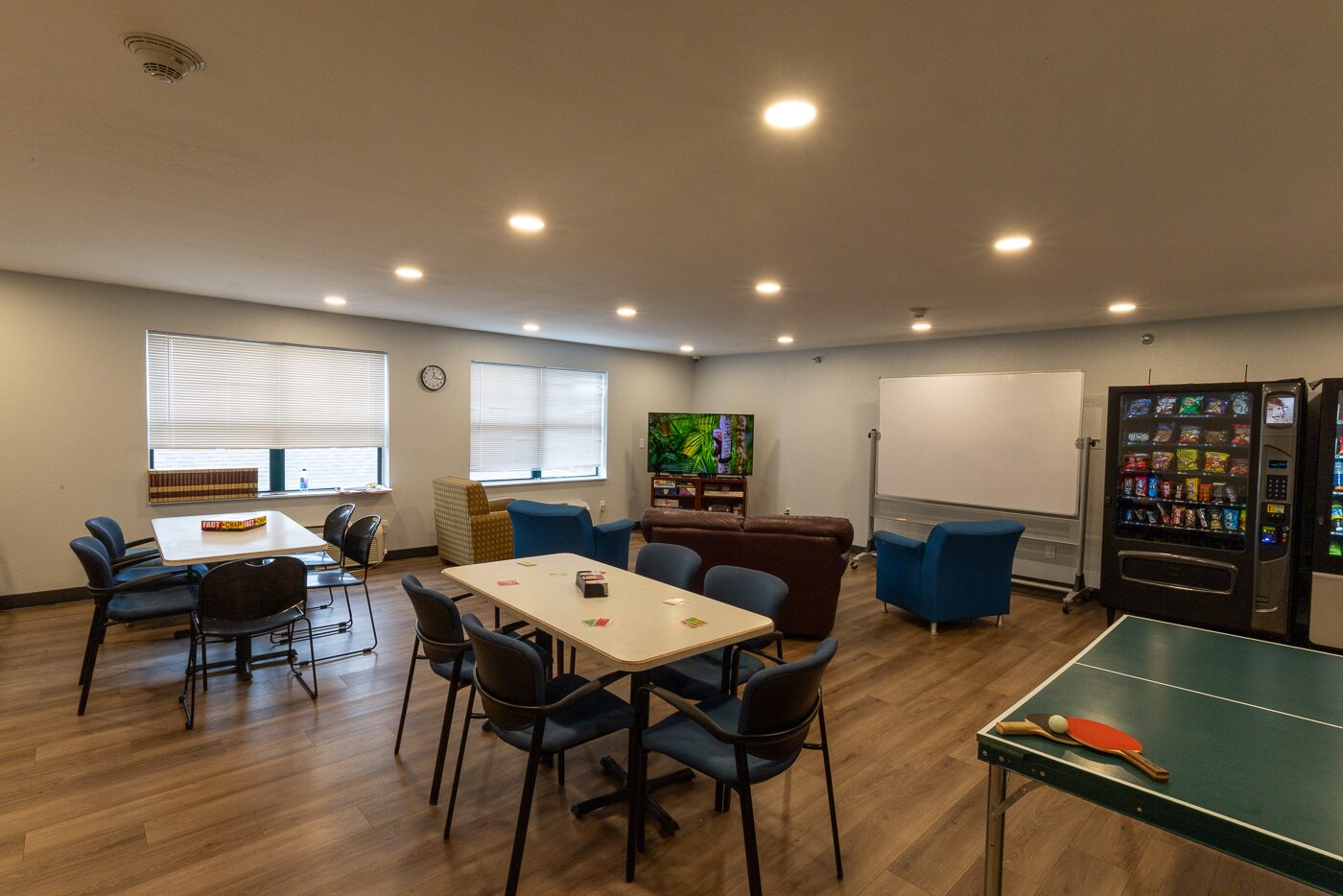
Music Therapy in Minnesota
Some feelings surface in sound before words, so NorthStar Regional keeps music therapy in Minnesota inside the treatment week. Music can express what you cannot yet name, and rhythm settles a body that talk winds tighter. Music groups run in the afternoons on our men’s and women’s residential campuses, no musical skill required. Open mic and talent nights are optional, recurring, and often the first place people laugh sober. We accept Medical Assistance (Medicaid) and most major insurers, and the goal is not a finished song but a substance-free way to settle yourself.
Music therapy at a glance
Music groups
Structured music sessions are part of your treatment week. They meet in the afternoons, along with education and recreation groups.
Open mic and talent night
Residents can play or sing for the rest of the campus at open mic and talent nights.
Skills you take with you
You don’t need musical talent. The goal is learning to manage strong emotions, and that skill stays with you after treatment.
Inpatient Rehabilitation
Art, music, gardening, and recreation are part of the full residential week on both the men’s and women’s campuses.
Licensed Treatment Programs

Founded 2015
Addiction and mental health care in one system

Multiple Campuses
Across the Twin Cities metro

MN Department of Health: Licensed
MN Department of Human Services: Licensed
Understanding the therapy
How Music Therapy Helps in Treatment
“Boredom is relapse’s best friend. We keep life at NorthStar full.”
Jason Vanderscoff, LADC, CEO of NorthStar Regional
Talk therapy assumes you can identify a feeling and describe it. Sometimes you can’t yet. Trauma, grief, and years of numbing can leave you with strong feelings you cannot put into words. Music gives you a way to express those feelings without talking. You do not have to explain anything, and rhythm can help you calm down. Once your body is calmer, it is often easier to talk about what you feel in the next group.
There’s a second job, just as clinical: joy. Addiction narrows life until the substance is the only reliable reward. Early recovery can feel gray without it. Creative work helps the brain learn to enjoy healthy activities again. So do gardening, recreation, movie nights, trivia, open mic, and talent night. At NorthStar Regional, we keep the days full on purpose.
Is this right for you?
Signs Music Therapy Could Help You
Creative groups are part of every residential week. These are the signs they deserve real weight in your plan.
Feelings Are Hard to Put Into Words
You can describe your week easily, but not how you feel. When talking doesn’t help you open up, you can often still express yourself by making something.
You Feel Tense but Can’t Say Why
You feel tense and uncomfortable, but you can’t tell whether it’s sadness, anger or something else. Making something can help you figure out what you’re feeling.
You Used to Make Things
Maybe there’s a guitar in your closet, a playlist you stopped adding to, or a band that drifted apart. Addiction took that away. Getting it back is part of recovery.
You Think Better With Your Hands Busy
Some people calm down through rhythm, repetition, and working with their hands. If sitting and talking makes you more anxious, this gives you another way to work through things.
Nothing Feels Fun Anymore
Being sober can feel flat at first. That doesn’t mean your personality has changed. Your brain got used to getting pleasure only from substances, and it relearns how to enjoy other things by doing them.
The Trauma Work Keeps Stalling
When a memory is too painful to talk about directly, creative work lets you come at it another way. You set a pace you can handle.
If even a few of these sound like you, that is reason enough to call. You don’t need to be certain, and you don’t need a diagnosis. A comprehensive assessment will sort out where this fits in your care. Reading this for someone you love? Start with our guide for parents or our guide for spouses and partners.
How It Helps
Music Therapy for Addiction and Mental Health
Expressing yourself and calming the nervous system aren’t addiction-only tools. The same creative groups that help reduce cravings also help people with depression express what they feel. They help people with anxiety calm down. That is why they are built into dual diagnosis care rather than added on the side. Whatever you’re working on, it has its own page and its own plan.
For Addiction
Every substance we treat is explained on its own page, from the first assessment through sober living.
For Mental Health
At designated NorthStar Regional programs, these conditions are treated together with addiction as co-occurring care, in one plan. Standalone mental health treatment, no substance use diagnosis needed, is available through our outpatient clinic in Shakopee.
What to expect
How Music Therapy Fits into Your Week
Three settings, one purpose: ways to express yourself when words won’t come.
Music Groups
Structured music sessions inside the treatment week. They run with education and recreation groups in the afternoons.
Open Mic and Talent Night
Community events where the campus gets loud in the best way. Optional, recurring, and often the first place people laugh sober.
Regulation You Keep
The goal is not a finished piece of music. It’s leaving with a reliable, substance-free way to settle your own nervous system. That gets written into your aftercare plan.
Where You'll Find It at NorthStar Regional
Music Therapy Across the Continuum
Most extensive at the residential level, where we build the whole day.
Residential
Inpatient Rehabilitation
Art, music, gardening, and recreation woven through the full residential week. On both men’s and women’s campuses.
Extended care
Low-Intensity Residential Treatment
Creative and community programming over a longer stay. Routines have time to become a life.
Outpatient
Intensive Outpatient
Skills-focused groups at outpatient rhythm, with the creative tools carried into your plan.
Treatment Options
Explore Our Addiction and Mental Health Therapies and Services
Recovery rarely rests on one method. Below are the addiction and mental health therapies and services at NorthStar Regional. Each has its own page. Your comprehensive assessment, the full evaluation that sets your plan, decides which mix of therapies your plan starts with.
Who's behind the work
About NorthStar Regional
NorthStar Regional is Minnesota’s treatment system built around access: alcohol and drug treatment centers and mental health care across multiple Twin Cities metro locations. Founded in 2015, we provide one connected continuum: detox (withdrawal management), residential, outpatient, mental health, and a sober housing pathway. Separate men’s and women’s campuses, co-occurring care at designated programs, and no faith requirement set us apart. We accept Medical Assistance (Medicaid) and most major insurers, and if you are uninsured, our admissions team helps you through enrollment. A person can walk in with nothing and leave with everything they need to build a life.
Paying for Care
Insurance and Payment Options
Our team helps review your benefits and handles the paperwork with you. If you have no insurance, we help walk you through enrolling for benefits. County case managers, probation officers, hospitals, and crisis teams send clients to us because, in their words, we just get it done.

Insurance and State Funding
Commercial plans, Medical Assistance (Medicaid), county placements, and private pay. We verify benefits and handle the paperwork with you.
We Are Here to Help
We help review your benefits, find your right starting point, and schedule you for the same day or the next whenever possible. Then we pick you up anywhere in the Twin Cities metro.


How Admission Works
What Happens From Your First Call to Your First Night
You did the hard part when you picked up the phone. Here is exactly what happens next, so nothing about day one is a mystery.
You Call and a Real Person Answers
A real person answers, usually within seconds, and asks one short question: substance use, or mental health? There is no phone tree, and you don’t have to tell your life story. We ask only what we need and handle the rest.
We Help with the Details
Our team helps review your benefits, and a short screening covers withdrawal risk, medical needs, and mental health, so you land at the right level of care. Then we schedule you, same day or next day whenever possible.
We Pick You Up
You get reminder calls and texts before pickup. For residential, your admissions coordinator and your driver also call you together, so you know who’s coming, what car to look for, and when to expect them. Many of our drivers are in long-term recovery themselves, and yours will help with your bags.
A Real Person Meets You When You Arrive
Your driver walks you inside and introduces you by name to the team member waiting for you. Your intake team completes your application with you. If you’re hungry, there’s a meal waiting. From there, treatment starts, and we help take care of the logistics along the way.

“The client has done the hard work by picking up the phone. We will carry them the rest of the way.”
Sarah Roy, Executive Vice President
Reviews from Google
Why Clients Choose NorthStar Regional
Don’t just take our word for it. Here is what alumni say about their time in treatment.
Keep reading
Related Articles and Resources
Resources
Before You Call
How admissions works, guides for families, and the forms you can complete early. More resources are linked throughout the site, or contact admissions and we’ll send anything by email.
Questions we hear every day
Common Questions About Music Therapy
What is music therapy in addiction treatment?
Music therapy in addiction treatment uses music to support your recovery. At NorthStar Regional, you take part in structured music groups during the treatment week, and you can join open mic nights and talent nights on campus. Making music lets you express what you feel without having to say it. Over time, it can help you feel ordinary joy again, something addiction often takes away.
Is this real therapy or just an activity?
It can be both. Creative groups at NorthStar Regional are part of the clinical week, with treatment goals like expressing feelings, managing strong emotions, and connecting with others. They’re also a chance to enjoy something again, which matters in recovery too.
I'm not a musician. Is this still for me?
Yes. Nobody is graded or judged on how they play. What helps is doing it, not how it sounds. You can feel calmer, understand your feelings better, and get through an afternoon without needing to use.
Why does music help with addiction?
Music helps with addiction because it gives you other ways to feel better. Over time, addiction can leave a substance feeling like your only source of relief. Making music lets you express yourself without having to explain, and it helps you focus without feeling tense. It’s also a reward that doesn’t come from a chemical, which makes it one more way to prevent relapse.
What creative programming runs at NorthStar Regional?
Music programming, art groups (covered in full on our art programming overview), and gardening. Also community events, including open mic nights, talent night, movie nights, and trivia. Fun is part of the program, not a break from it. Boredom is one of the most common reasons people relapse.
Will insurance cover treatment that includes creative programming?
Usually, yes. Music groups are part of the treatment program itself, so they’re included when your insurance covers the program. We accept Medical Assistance (Medicaid) and most major insurers. Our team can help you go over your benefits.
Admissions
Make the First Call and We'll Take It from There
Confidential, no obligation, and answered by someone who knows what you’re facing and cares to listen.