

The hardest part of early recovery is often not the treatment. It is the Tuesday afternoon three weeks later, back in the same apartment, with the same phone contacts and the same empty evenings. A sober living home exists to change that one variable, and the research agrees with what people who have lived in one already know: where you sleep shapes whether recovery holds.
What follows is what sober living is, what the evidence says it may contribute to recovery, and what it costs. It also covers what Minnesota’s recovery-residence requirements and voluntary certification system mean for people evaluating a home. NorthStar Regional’s continuum extends into sober housing through a partnership rather than a program of our own, so this is written to help you evaluate any home.
What Is Sober Living?
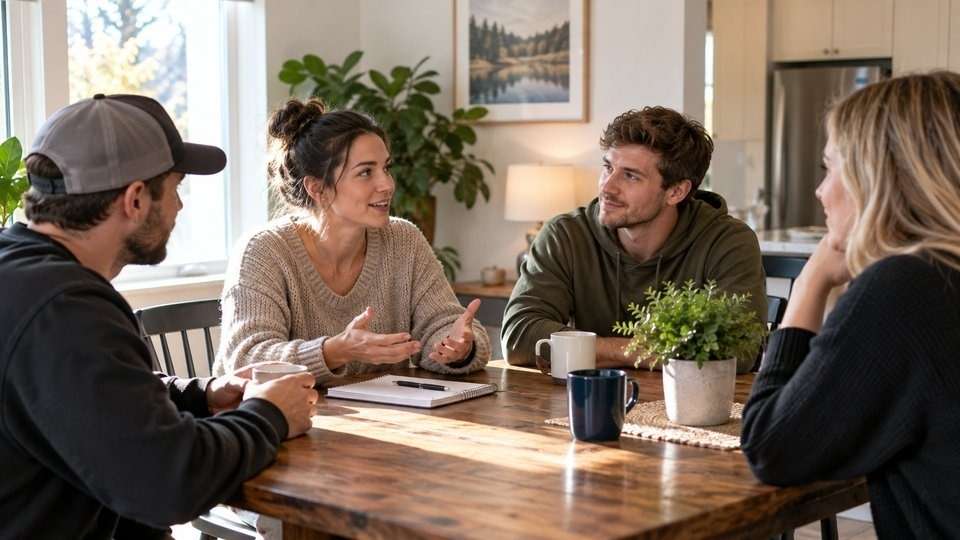
Sober living is a form of recovery housing. It is a shared residence where everyone has committed to abstinence, and where the household itself supplies the structure a person in early recovery would otherwise have to build alone. There is no clinical program inside the walls. Residents pay rent, hold jobs, attend support meetings, and answer to house rules and to each other.
That last part separates a sober home from an apartment with good intentions. A house manager, often a resident further along in their own recovery journey, enforces the rules and handles the day-to-day. The mechanism is not clinical. It is the ordinary social pressure of living with people who will notice. Our post on emotional sobriety covers the wider adjustment around it.
Alcohol-Free and Drug-Free Living Environments
The baseline is abstinence on the property. Sober living homes are alcohol free and drug-free living environments, and most enforce that with house rules, random drug screenings, curfews, limits on overnight guests, and strongly encouraged attendance at 12-step or other support groups. Residents who use are typically asked to leave, though good homes have a written process rather than a snap decision. The point of the rules is a sober environment in which maintaining abstinence is the default rather than a daily act of will.
Part of what the household does is remove the triggers that come built into the old apartment, which is the plainest form of relapse prevention there is. The rules read as restrictive on paper and land differently in practice. For some people, the structure of recovery housing reduces environmental risk while they rebuild routines and independence. Others can recover successfully in different housing arrangements, depending on their clinical needs, support network, and living environment. If you are still working out whether treatment is warranted, the signs of addiction are a place to start.
Sober Homes, Halfway Houses, and Recovery Residences
The vocabulary is confusing partly because it has changed. Recovery residence is the current umbrella term, and sober home and sober living residence are the everyday ones. Halfway houses usually mean something else: a facility tied to the criminal justice system or to a specific rehabilitation program. Those often come with a fixed length of stay, a requirement that someone has completed a formal treatment program first, and a funder who is not the resident.
“Halfway house” is an older and inconsistently used term. It often refers to structured transitional housing, including housing connected with criminal-justice reentry or treatment systems, but its exact meaning, funding, eligibility requirements, and length of stay vary by program and jurisdiction.
Older language survives in agency names and in statute, which is why you still see substance abuse in the title of a federal body or a research paper. Person-first phrasing, a person with a substance use disorder rather than a label, is the standard in Minnesota licensure and in clinical writing, and it is used here.
The Four Levels of Recovery Housing
Recovery housing is not one thing. The National Alliance for Recovery Residences sorts it into four levels of support [1]. Level I is peer-run and democratic with no paid staff, the Oxford House model being the recognizable example. Level II is monitored, which is what most people mean by a sober home: house rules, peer accountability, and a resident manager on site.
Level III is supervised, adding structured weekly programming and trained or credentialed staff. Level IV integrates clinical addiction treatment into the residence. Which level a home occupies tells you more than a brochure will, because it tells you how much support is staffed rather than hoped for.
The four NARR levels describe different amounts and types of support rather than mandatory stages of recovery. Some residents may later move to a less structured setting as their needs change, but people do not need to progress sequentially through all four levels. Homes at the clinical end are closer to a treatment step-down (the way withdrawal management steps down to residential care) than to a rental.
Does Sober Living Work? What the Research Says About Positive Outcomes
Sober living options have a real evidence base, which is unusual for something this low-cost. Recovery housing adds peer support and a recovery-supportive social environment to the clinical services a person may receive elsewhere. These supports complement treatment rather than replace professional care. Two influential bodies of research are described below, but newer systematic reviews include additional comparative studies and provide a broader picture of the evidence.
Randomized Evidence from Communal Recovery Homes
The strongest design belongs to a 2006 randomized trial in the American Journal of Public Health. One hundred and fifty people in Illinois were assigned, after substance abuse treatment discharge, either to an Oxford House or to usual care, meaning outpatient programs or self-help groups. At the 24-month follow-up, the housing group had significantly lower substance use, 31.3 percent against 64.8 percent. They also had higher monthly income, $989.40 against $440.00, and lower incarceration, 3 percent against 9 percent [2].
The income gap is roughly $550 a month, often more than the rent. And the incarceration finding matters to anyone whose housing decision is entangled with probation or with time already served in local jails.
What the California Sober Living House Studies Found
The second body of work followed 300 people entering two types of sober living homes over 18 months, funded by the National Institute on Drug Abuse. One site was attached to an outpatient treatment program; the other was freestanding houses with no formal treatment services. Average length of stay was 254 days at one and 166 at the other [3].
Six-month abstinence at the treatment-affiliated site rose from 11 percent at baseline to 68 percent at 6 and 12 months, settling at 46 percent at 18 months. At the freestanding site, it moved from 20 percent to 40, 45, and 42 percent. Residents showed significant improvement in drug and alcohol severity, employment, arrests, and psychiatric symptoms. Greater involvement in 12-step groups and recovery-supportive social networks were strong predictors of better outcomes in the California studies [3].
The Core Benefits of Sober Living
The benefits of sober living are not mysterious once you look at the mechanisms. A sober home does four things that are hard to do for yourself in the first year of a life free of alcohol and other drugs.
House Rules, Structure, and Personal Responsibility
Structure in a sober living residence is external first and internal later. Curfews, chores, rent due on a date, attending house meetings: none of it is therapeutic in itself. All of it rebuilds the daily routine that active use tends to take apart. Personal responsibility gets practiced rather than discussed.
The difference from inpatient treatment is that the consequences are real. Miss rent and you have a problem with your housemates, not a note in a chart. That is closer to everyday life than any inpatient program can be, which is the point of an intermediate step. A sober home also allows more day-to-day freedom than a treatment center, and that freedom is the thing being practiced. Our guidance on how to manage burnout and stress covers keeping the load sustainable.
Peer Support and Sober Relationships
Peer support is the part sober living residents talk about years later. Living with people recovering from the same thing removes the work of explaining yourself. It also replaces a social network built around use with one built around not using, which may be the most reliable thing a household can do to support recovery. The California findings put a number on why that matters: social network composition predicted outcomes about as strongly as anything else measured [3].
A harder benefit hides inside this one. Living closely with other people brings out the interpersonal skills that had not been getting much practice, including how to disagree without leaving. Damaged relationships outside the house usually cannot be repaired until that skill is back, and repair takes longer than sobriety does. Our six steps to rebuilding trust in a relationship set out the sequence.
Life Skills and Independent Living
Life skills sound like a workshop and usually are not. It means cooking on a budget, keeping a bank account, getting to a shift on time, managing a schedule with appointments in it, and building healthy routines that survive a bad week. Residents who have spent years in crisis often have not run an ordinary household recently. Coping skills and knowing which community resources exist belong on the same list.
Independent living is the goal, and the value of a sober home is that independence arrives in stages. Residents usually keep working or go back to school while they live there, which is how financial independence gets rebuilt rather than promised. Rebuilding everyday skills can give residents tangible evidence of growing independence and confidence. This is why the practical work matters; our ways to increase self-esteem lean in the same direction.
A Bridge from Addiction Treatment to Everyday Life
The common path into sober housing runs through addiction treatment. Someone completing residential treatment, or stepping down from withdrawal management, needs somewhere to go that is not the situation they left. NorthStar Regional’s intensive outpatient with lodging covers part of that gap clinically, and sober living covers what comes after.
A comprehensive assessment is where this gets decided, since the sixth ASAM dimension rates recovery and living environment directly. Our explainer on the rule 25 assessment and what replaced it covers how that recommendation is made now. Attending outpatient care while living in a sober home is common, and often the whole design.
Minnesota’s Recovery Residence Certification Changes
Minnesota has created a voluntary certification program for recovery residences. The commissioner of human services administers it, and it is built on best practices from the American Society of Addiction Medicine and the Substance Abuse and Mental Health Services Administration. Certification for recovery residences will now take effect on January 1, 2027 [4].
Voluntary is the operative word. Sober living homes in most of the country are not licensed or funded by state or local governments, and residents pay the costs themselves [3]. Certification is voluntary, but Minnesota’s baseline recovery-residence requirements apply regardless of whether a residence chooses to become certified. Certification adds state review and additional documentation and oversight requirements.
What Certification Will Require
A certified residence must pass an initial on-site inspection, then a review every three years, and must publicly display proof of certification inside the home. Certification lasts three years and is tied to the address on the application. Operators submit background checks for the operator and staff, landlord permission, resident forms, and proof of insurance. There are two insurance requirements. Where staff handles resident money or property, the home needs $10,000 in employee dishonesty coverage. It also needs $2,000,000 in bodily injury and property damage coverage for each occurrence [4].
The operating requirements are more concrete. A certified home needs written policies on access to and storage of prescribed medications, and residents may use legally prescribed pharmacotherapies for opioid and other substance use disorders, which settles a question some homes have answered badly. Where a person is still stabilizing physically, clinically managed and medically monitored withdrawal management comes before a recovery residence rather than alongside it.
Under Minnesota law, these baseline operating and resident-protection requirements apply to all recovery residences, whether or not they voluntarily obtain state certification. Certified residences must additionally complete the certification application, inspection, documentation, insurance, background-check, and ongoing monitoring requirements [5].
What to Ask a Sober Home Before You Move In
You do not have to wait for 2027 to use that as a checklist. Ask which NARR level the home operates at and whether staff are paid, trained, or peers. Ask for the fee schedule and refund policy in writing, and what happens to your deposit if you leave early. Ask whether medication for opioid use disorder is permitted, because a home that says no is ruling out a standard treatment. Ask how a return to use is handled and whether that process is written down, and whether naloxone is on site. A good home answers all of this without hesitating, and the ones that get defensive have told you what you needed to know.
Men’s Sober Living and Gender-Specific Sober Housing
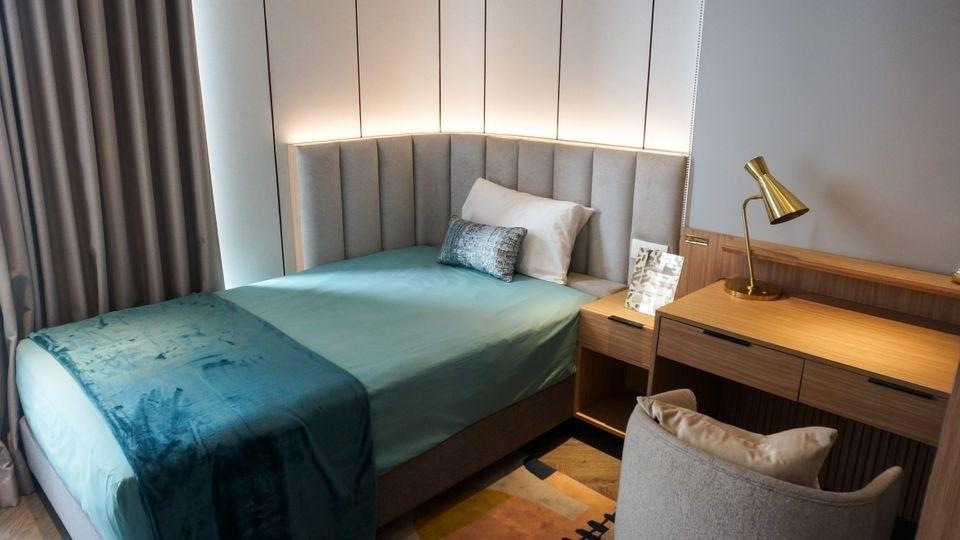
Most recovery residences are single-gender, for practical rather than ideological reasons. Removing romantic dynamics from a household in early recovery removes a common source of instability, and it allows conversations people tend not to have in mixed company. Men’s recovery residences may tailor peer support, programming, and community connections to issues commonly relevant to their residents. Even so, the structure and culture vary substantially by home. Families usually want to know how to help from the outside, and our post on being a support system for a struggling loved one covers that.
The same logic drives women-only housing and programs like our women’s rehab center, where safety and trauma history often make a single-gender setting the only workable one.
Common Questions About Sober Living Cost and Length of Stay
Three questions come up before anything else, and vague answers to them are a reason to keep looking.
How Long Do People Stay in Sober Living?
A stay in a sober home usually runs longer than people expect going in. Average length of stay in the California studies was 254 days at one site and 166 at the other, roughly five to nine months [3]. Many homes ask for a minimum of 90 days and set no maximum, and residents in a second phase of stay typically face looser curfews and fewer required meetings.
The useful frame is a set of conditions rather than a date: steady income, a support network not made up of people you used with, somewhere to live that is not the old situation, and a plan for the first bad week. Those are the conditions long-term recovery actually rests on. Recovery continues well beyond the end of formal treatment, which is why housing, social support, ongoing care, and everyday routines matter after discharge.
Who Pays for Sober Living?
Usually, residents pay for it themselves. Sober living is housing, not a clinical service, so it generally isn’t billed to insurance, and homes typically aren’t state-funded [3]. Before you choose a home, ask what the fee covers, such as utilities, food, drug screenings, and transportation, and whether there’s a separate intake fee. Some counties and criminal justice programs will pay for a placement, and some homes keep a small number of scholarship beds. Costs and options vary from home to home, so it’s worth asking. What you’re paying for is a stable, sober place to live while you work on recovery.
What Happens After a Return to Use?
Most homes ask a resident who uses to leave, at least temporarily, because the abstinence of the household is what everyone else is relying on. What varies is whether there is a written process, whether a return is possible after a period of stability or a higher level of care, and whether the home helps arrange that care rather than simply ending the tenancy.
A return to use should prompt reassessment of safety, treatment needs, medications, mental health symptoms, recovery supports, and the person’s living environment. However, it does not automatically mean the previous level of care was inappropriate.
The signs of co-occurring disorder are worth knowing before they turn up in a house meeting. When substance use and mental-health symptoms occur together, the appropriate response may involve adjusting clinical care, medications, recovery supports, housing, or several of these at the same time.
Sober Housing in the Twin Cities Metro
The evidence for sober living is unglamorous and fairly consistent. A stable, alcohol free household with peers and rules improves the odds, and the effect shows up in employment and arrests as well as in use. Recovery depends on more than motivation alone. Stable housing, supportive relationships, appropriate treatment, medications when indicated, and daily structure can make sustained recovery more achievable. An alcohol free life is built out of ordinary days, and a sober home is a way of getting enough of them in a row.
NorthStar Regional provides substance use disorder and mental health treatment across the Twin Cities metro, and our housing partner A Way Out Sober Living operates recovery residences in Chaska, Shakopee and Carver.
Sources
- National Alliance for Recovery Residences. NARR Standard, Levels of Support. https://narronline.org/standards/
- Jason LA, Olson BD, Ferrari JR, Lo Sasso AT. Communal Housing Settings Enhance Substance Abuse Recovery. American Journal of Public Health. 2006;96(10):1727-1729. https://pmc.ncbi.nlm.nih.gov/articles/PMC1586125/
- Polcin DL, Korcha R, Bond J, Galloway G. What Did We Learn from Our Study on Sober Living Houses and Where Do We Go from Here? J Psychoactive Drugs. 2010;42(4):425-433. https://pmc.ncbi.nlm.nih.gov/articles/PMC3057870/
- Minnesota Statutes 254B.213, Recovery Residence Certification. Effective January 1, 2027. https://www.revisor.mn.gov/statutes/cite/254B.213
- Minnesota Statutes 254B.211, Recovery Residence Requirements. Effective January 1, 2027. https://www.revisor.mn.gov/statutes/cite/254B.211